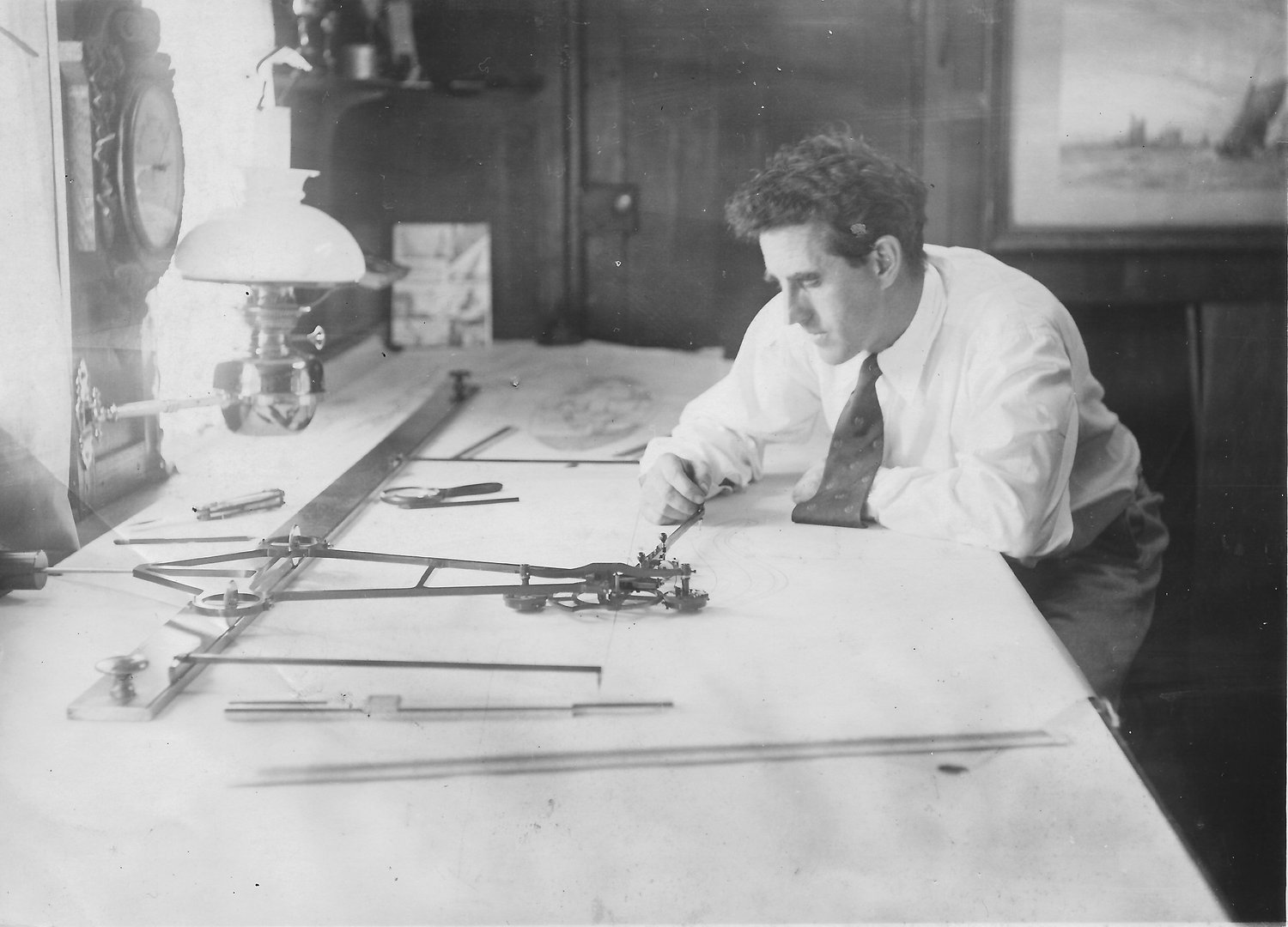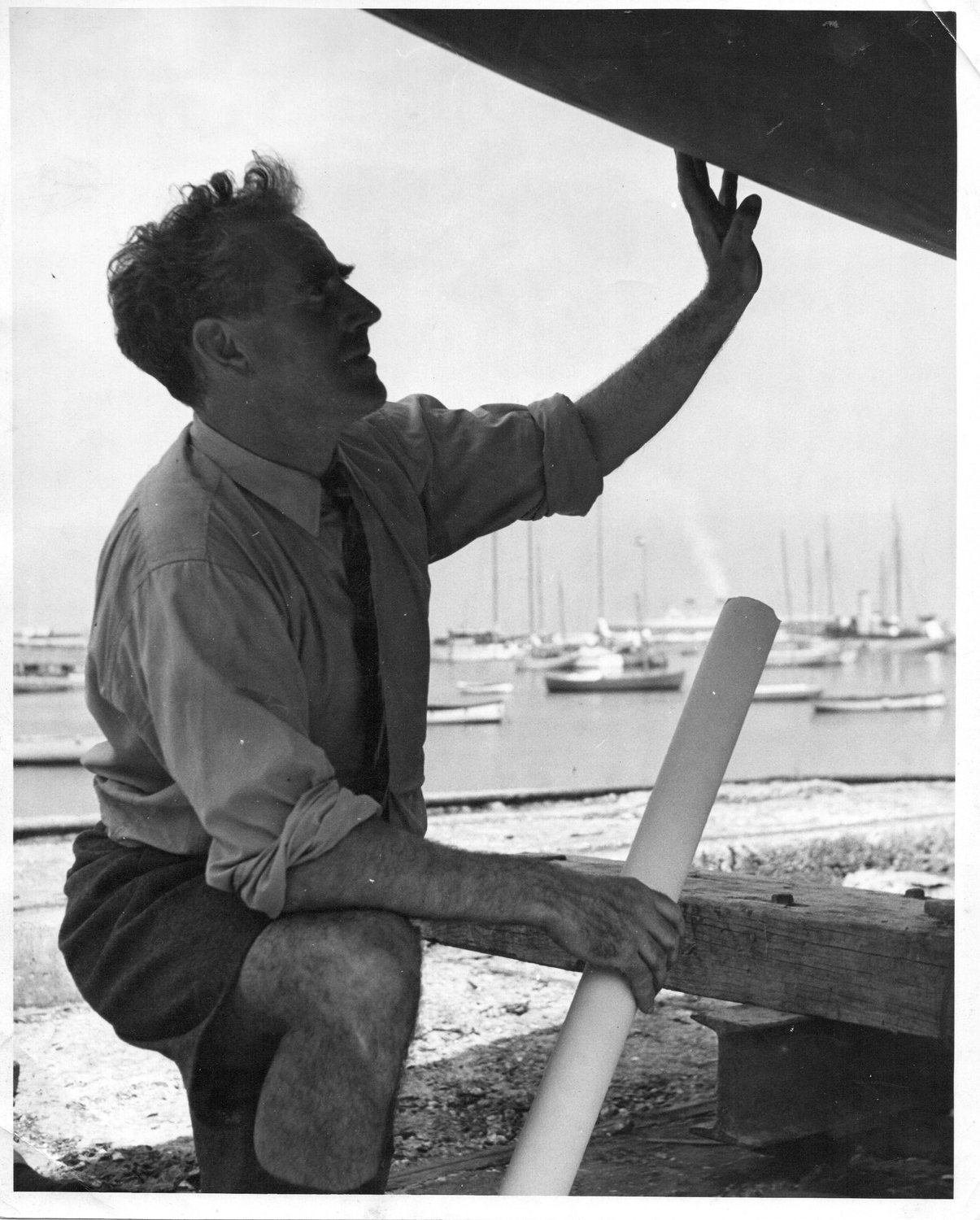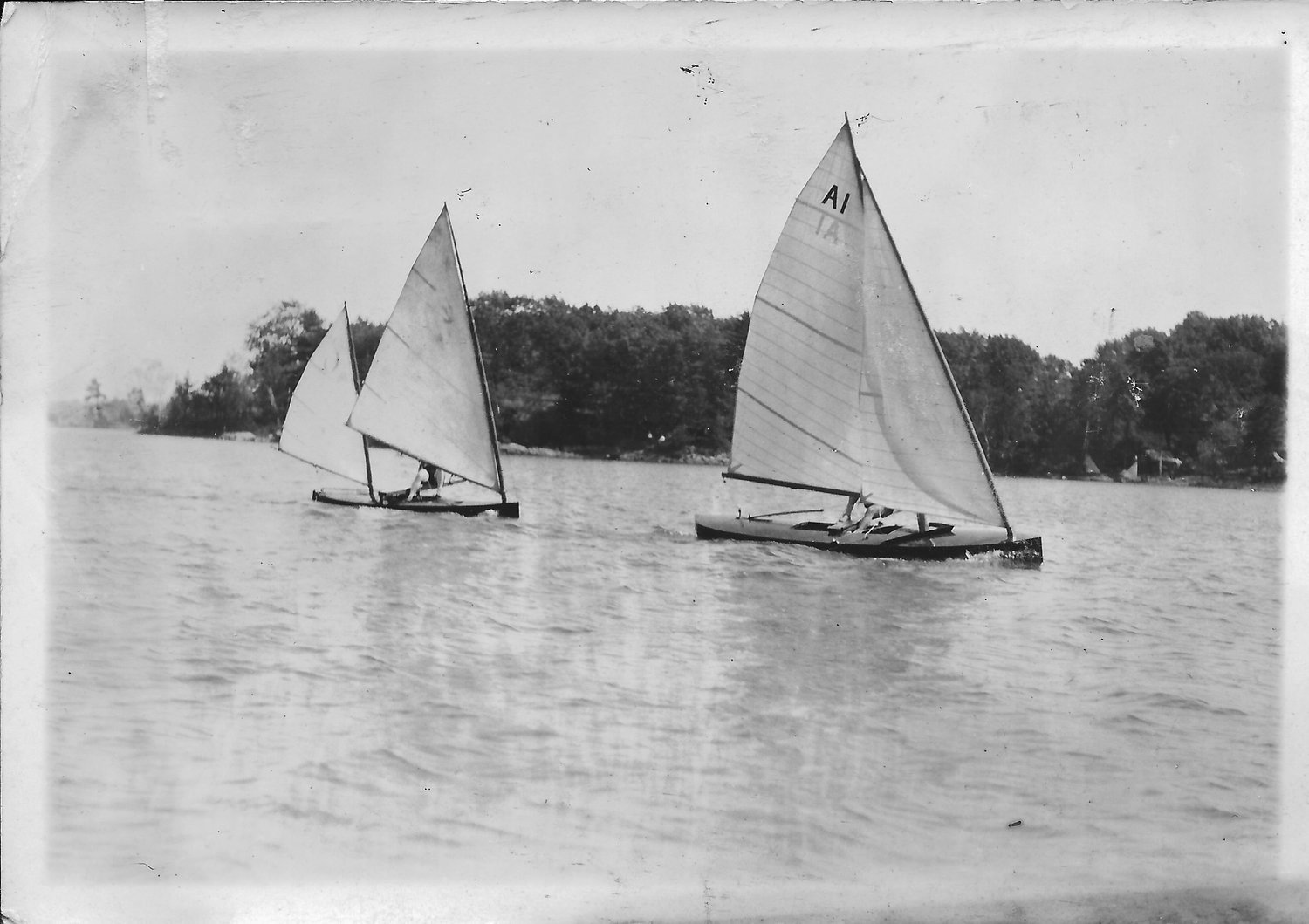
Uffa Fox was a rebel. He refused to conform to the system, and used his innovative brain to come up with radical ideas. His breakthrough came in the 1928 season when he campaigned his International Fourteen Avenger. While Avenger was not the first dinghy to plane, she was the first that would plane easily in a moderate breeze. She totally dominated the class and won the Prince of Wales Cup at Lowestoft by over 5 minutes. Avenger became the standard for racing dinghy design.
In 1933 Uffa visited America with Roger de Quincey to challenge the sailing canoe scene there. He designed twin sailing canoes for the purpose, Valiant and East Anglian. The American canoes sailed with outrigger boards and were ketch-rigged, two masts being required by the rules. Uffa interpreted these regulations in his own way, placing a small mast in front of the unstayed mast at an angle so that it touched the main mast in the upper third and could carry the foresail, making a much more efficient rig. Among a host of trophies, the pair won the New York Canoe Club's International Trophy, the first time it had left American shores.
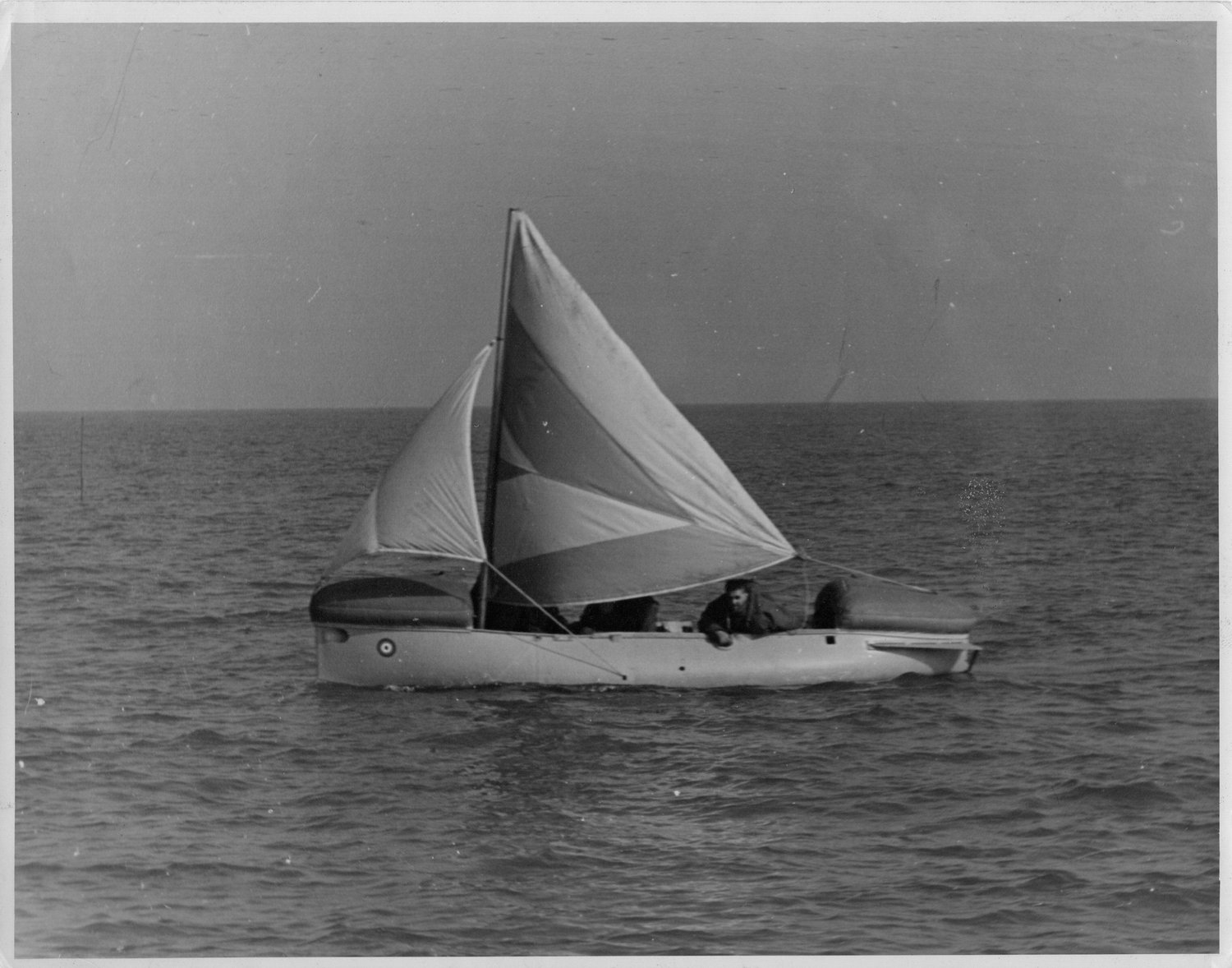
As an example of his lateral thinking, in 1941 the RAF was losing a lot of aircrew forced to ditch in the North Sea and English Channel. A great deal of thought was going into giving them a better chance of rescue than wallowing in a liferaft. Uffa applied himself to the problem, envisaging a boat that could be flown and dropped close to ditched aircrew so they could sail themselves out of danger. Following a rapid development programme led by Uffa, around 600 Airborne Lifeboats were built.
In 1955 the Duke of Edinburgh, as president of the Royal Society of Arts, presented Uffa with the Diploma of Royal Designer for Industry. In presenting the award Prince Philip commented: "There is a tendency today to believe that every new invention must be scientific or rational. I can confirm that there is nothing scientific or rational about Mr Fox."
Photographs